Friday, February 21, 2020

The Importance of Being Kind

Photo From Pinterest
We should demonstrate kindness. But what does it mean to be kind?

I often find myself asking that question regularly. I believe that kindness is the most important value that a person can have, and I feel that many of us are too focused on 'who deserves kindness' as well as the outcome of their actions; this includes myself sometimes.

We often find ourselves not wanting to associate with certain types of people. For me, I don't enjoy associating with people who consistently lie because it impedes on the trust of our relationship. Harry Frankfurt, an American Philosopher well known for his teachings at Princeton, wrote a book titled, On Bullshit. In his chapter, On Truth, Lies, and Bullshit, he writes that "lies are designed to damage our grasp of reality. So they are intended, in a very real way, to make us crazy." It makes sense... we don't want to be around people who bring us down or make us crazy, but rather we want to be around people who will uplift us, and that's totally OK; however, that doesn't mean that we can't be kind to everyone. 

Here's the truth: You should demonstrate the same amount of kindness to your enemies as you would your best friends. Why? - Well, there are many answers, but the main reason is that being kind helps morally and spiritually uplift people.


Picture of Michael Kent and Tiffany Whittier
There's this beautiful story of an unlikely friendship between an African American parole officer and former neo-Nazi/white supremacist. The parole officer, Tiffany Whittier, simply gave Michael Kent a chance, and they ironically became friends. Ultimately, Michael Kent's friendship with Tiffany Whittier helped him leave his life of hate behind him. Stories like this make me believe why it's so important to be kind to everyone.

Now, lets be honest with ourselves... We've all bullshitted, lied, and strayed away form the truth at some point in our lives. Sometimes it's hard to tell the truth in certain situations; however, when we don't tell the truth, we are impacting others in ways we cannot imagine. Going back to Frankfurt, I feel what he's trying to get at is - though bullshit is unavoidable, we should strive to live in an environment of truth and honesty. There is no such thing as a utopia revolving around truth, but that doesn't mean we have to live in a dystopia revolving around bullshit.

Now, even when we are kind, many of us feel the need to receive praise for our actions. Cary West, a carpenter, writer, and blogger, wrote an article on how kindness can change the world. He says to "focus on the act of giving, rather than the results of your actions. Detach from outcome, and you'll be free to make a difference in ways you never imagined."

Little acts of kindness go a long way. Things like:


1. Smiling at others
2. Giving compliments
3. Even just saying "hi."


All of these things can really have a positive impact on someones day.

One of Frankfurt's main points is to relay how important the truth is, but sometimes the truth is harsh. Nonetheless, it is still important to be truthful, and at the same time it's important to be kind about it. 

For example: I strongly dislike seafood. If my friends asked me to go out to lunch with them to a seafood restaurant, I wouldn't say to them, "Seafood is disgusting, no thanks." Instead, I would say something like, "Thanks so much for offering! Unfortunately, I am not a fan of seafood, but you guys go ahead and have a fun time!"

Moving forward in our lives, lets strive to be kind to everyone. Lets not reject people for who they are, but rather uplift them with love and kindness. Lets be more generous, more courageous, and more truthful. Lets stop the bullshit, and lets start the spread of ideas, information, and happiness.

What Freedoms Will We Even Have in a Technological Future?

Have you ever wondered where we’re going? What’s in store for us when technology becomes an inevitable constant in all aspects of human life, and how will society change? Will it become something devoid of morals, as portrayed by recent sci-fi media like The Outer Worlds? What’s stopping technology from becoming something we can no longer control? I often think about futuristic concepts and the different technologies that might be available even in 20 years. I wonder: “how will those technologies affect our lives, and how could they be used to benefit us?”

David Gelernter, a computer scientist targeted by the Unabomber in 1993, says in his manifesto: “we don't believe in technological change (we only say we do), we accept bad computer products with a shrug … instead of demanding that they be fixed and changed.” What Gelernter points out here is that companies aren’t held accountable as much as they should be over low quality products. The potential for profits vastly outweighs the need for quality in the eyes of many companies, and this truth hasn’t changed, even decades after the publication of his manifesto.

It’s hard to tell what will happen in the future, considering how much power corporations currently have, and seeing politicians take donations from those companies, leading to even fewer freedoms for consumers. I personally believe that everything will be okay, that our future is hopeful and won’t eventually lead to a boring, dystopian society. In the vein of a hopeful future, the concept that caught my attention in Gelernter’s manifesto is his "cybersphere" prediction. This manifesto was written at the turn of the century in 1999, yet Gelernter developed this idea that technology would be integrated into nearly every part of our lives. The idea that the internet will evolve into a cybersphere is probably the closest thing we’ll have to a hopeful technological future. A future where technology is used for everything in our lives, while staying simple enough to not be influenced would make such technology an incredible tool for our benefit.

Self-aware terminators are unlikely, please relax
If Gelernter’s idea of the cybersphere does come to fruition, I doubt we have anything to worry about. Sure, the premise of rouge singularities leading to bloodthirsty robots is a possibility, but that hypothetical would have to be created and programmed by someone. Even then, whatever the cybersphere is would have failsafe’s and firewalls to prevent such an influence from taking hold. Gelernter does have some ideas in his manifesto that are infeasible, such as his concept of a decentralized internet, where websites are only as large as the current userbase. Despite that, he does have some incredible ideas, and did catch my attention with most of his points. His third point also caught my attention, where he says that “Everything will change.” and I agree with him. I’ve had this idea in my head for as long as I can remember, and it’s a phrase that I’m trying to live by: “I want to see the world move forward.” Until technology is no longer a luxury, we’ll just have to wait and see what the future holds.

The Lonely, Lying World of Instagram


Meet Lil Miquela, an Instagram ‘influencer’ with over 1.9 million followers.

Something about her looks a little off, right? That’s because she doesn’t exist in the physical world. She is an AI created by a start-up called BRUD. She is depicted as the creator of her own posts, music, and serves as an advertisement for high-end brands like Samsung and Calvin Klein. Her Instagram bio reads “change-seeking robot with the drip,” but it might as well be “nothing on this page is real” because, like the America’s Last Line of Defense page, what she’s selling is completely fake, and people are buying it.

Lil Miquela and Instagram’s social atmosphere are examples of what Frankfurt is referring to on page 38 of On Truth, Lies, and Bullshit. He claims that “the amount of lying and misrepresentation of all kinds that actually goes on in the world … is enormous, and yet productive social life manages somehow to continue.”

Instagram allows influencers like Miquela to thrive because of the lies presented in their profiles. These lies are giving their followers exactly what they want to see.

Take a look at this recent ad on Miquela's Instagram.

Miquela calls herself a ‘robot’ in posts like these and in her bio, but even that isn’t the whole truth. Her images are fabricated using CGI, some with real people like her supposed 'boyfriend' above, to make it seem like she lives in the world we do.

As a CGI, she has perpetually flawless skin. It's hard to say whether her face has been photo-shopped on a human who took this selfie, or if the whole body has been inserted in the blank space of the original photo with CGI. Either way, Miquela is lying in this ad about having a physical Samsung Galaxy S20 and that the camera makes her look like that.

She has a steady following of people who are deeply invested in what she has to say, with comments on this post like "this is the content I'm living for," and "really wanna try that phone." Samsung benefits from her users buying the phone based on the lies on this ad. Samsung will partner with other 'influencers' on Instagram who will likely twist the truth for their followers.

This situation arises from this fundamental function of Instagram - users like only what they want to see, even if they know it's a lie.

Later in the chapter mentioned above, Frankfurt discusses a poem by Shakespeare about a couple who lies to each other and both partners are aware of the other's lie. They lie "happily together."

Miquela, and other 'influencers,' and their followers have a similar relationship to the Shakespearean one. Both sides are aware that there are many lies weaved into their Instagram identities. The followers like the posts depicting a cute love story and selfies of attractive 'people' taken with a highly-sought-after phone. Miquela gains followers, likes, and money from the Samsung ad. Both are content and got what they wanted.

That's the bottom line of relationships on Instagram and why Instagram will continue to thrive. Miquela's followers will support the things they want to see. The company who created Miquela will gain a following by posting content curated for those people. That following will lead to more paid advertisements, and the followers will buy brands they're told they should have.

And so the "productive social life" of Instagram will continue on exactly because of this phenomenon.

23 and ....... Everyone?


It seems magical, you spit in a tube, ship it off, and a few weeks later you find out that you’re great grandpa was 1/5 Mongolian, or that you’re genetically predisposed to hate the sound of people chewing, but have you stopped to think about what they’re doing with that data? They’re selling it, and it’s making them a lot of money. A quick peruse through their website will reassure you that all your “individual level” information is stripped away when they share information with third parties to “perform business development” and “improve services” but is that any better?

When you register for their service, there are several privacy choices you can make, like would you like them to keep your saliva or discard of it, but you never have the option to say what you would like done with your information. In fact, they say that by utilizing their service, you are “consenting to having 23andMe and its contractors access and analyze your stored sample.” Maybe that’s why pharmaceutical giant GlaxoSmithKline purchased a 300 million stake in the company back in 2018. You are quite literally spending 100 plus dollars to help a giant corporation make even more money off your personal information. These companies are fooling the public into thinking they are some benevolent purveyor of the information, when in reality they are building vast information data bases.

The Equifax data breach clearly demonstrated that even the supposedly most secure systems can be hacked. What happens if your entire genetic profile is leaked? The philosopher Luciano Floridi, in his essay Privacy- Information Friction discusses a self-constitutive view of privacy asserts that people have the right to “renewable identity” and DNA is unchanging much like biometrics. Once something like that is associated with your identity profile, there is no going back. Your right to freely “mould who you are and who you can be” has been stripped away. Floridi discusses how the benefits of biometrics probably outweighs the negatives, but I do not believe the same can be said about genetic profiles. What if the government comes knocking trying to implicate you in a crime? Apple said no, but who is to say 23 and me will follow suit? Just look at the Golden State Killer Case if you’re interested.


Just How Far Away Are We?

Virtual reality has become a hot topic in recent years and movies like Ready Player One or TV shows such as Sword Art Online popularized the concept of complete immersive video games where players' whole lives were dependent upon success within the game. In these games, all players went by an alias as to conceal their identity and their greatest secret was who they really were outside the game. In these virtual worlds, as soon as real names or locations in real life are brought up, players feel a sense of uneasiness that their bodies are compromised as their body is completely immersed within the game. Gary Marx, Sociology professor at the University of Colorado, defines in his paper, "Some Reflections on the Sociology of Anonymity," 7 different types of identifying knowledge: legal name, Geo-locatability, pseudonyms (linked & non-linked), pattern knowledge, social categorization, and symbols of eligibility/non-eligibility.

Image result for full dive virtual reality

In both these forms of media entertainment, the players are struggling to keep their true identity from being found out and their progress in the game destroyed. This protection is due to their need to keep their reputation and assets under control. However, in creating/playing in these games, it seems to fall upon the role of the creator to encrypt the each user's data while they play and where from. James Moor, Philosophy professor at Dartmouth, defines in his paper, "Ethics and Information Technology," three stages in technological revolutions: introduction, permeation, and power stages. However, virtual reality gaming still seems to be in its introduction and the major consoles: Oculus Rift, Oculus Quest, and Rift S are still relatively expensive in comparison with other consoles and are yet to permeate into many households. The difficulty of its permeation relates both to cost and the necessary specifications required to run the console properly.

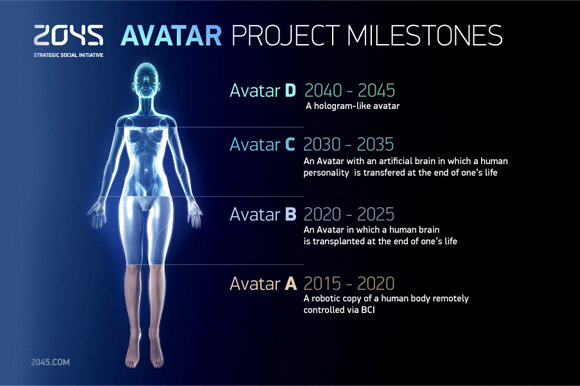
Full-dive virtual reality still seems to be 50-100 years away, however projects such as the 2045 Strategic Social Initiative or Avatar Project is working diligently to create a robotic copy of the human body controlled by a brain-computer interface. However, this technology is still in its initialization phase and has yet to see substantial breakthrough but innovation is exponentially getting better and this technology could see drastic changes in the next few decades.

Cyborg Soldiers

The United States military has been researching the implications of inserting implants into soldiers. Researchers focused on “ocular enhancements to imaging, sight, and situational awareness; restoration and programmed muscular control through optogenetic bodysuit; auditory enhancement for communication and protection; and direct neural enhancement of the human brain for two-way data transfer.” However, the study found that public perception of the mass adoption of cybernetics was an issue especially because of movies such as those in The Terminator franchise. 
As Doug Hill explains in his article, “The eccentric genius whose time may have finally come (again)”, Norbert Weiner is the inventor of cybernetics and his fear of the future was because of two things: Humans can’t resist selfishly misusing the powers machines give to us and the inability to control machines due to their automation and intelligence. He refused to work with the military and corporations for ethical reasons which according to Hill, may have hindered his progress in technological advancements.

A troubling aspect of this research is, for some enhancements to be made, a soldier most-likely has to be injured for them to consider getting the surgery done due to the risk taken in surgery. Researchers stated, “neural implants for brain-computer interfacing would allow for seamless interaction between individuals and secondary asserts (machines). This control could be exerted upon drones, weapon systems, and other remote systems operated by an enhanced individual.” 


The military is looking to cybernetically enhance soldiers to control machines, “but also transmission to operator (machine to brain) and human to human (command and control dynamics) to enhance situational awareness as drone, computational analytical, and human information is relayed to the operator.” DARPA, the Defense Advanced Research Projects Agency, has already tested a prosthetic memory chip and even Elon Musk is working on a plan to “achieve a symbiosis with artificial intelligence” and merge humans with AI so they can be able to keep up with it. Musk plans to conduct human trials soon which are intended to treat brain injuries.

Wiener’s reasons for worry may have been far-fetched during his time, however, as DARPA, the Pentagon, and Elon Musk continue their research into the cybernetic enhancements of humans, it is more than ever a cause for concern. As transhumanists advocate for emerging technology, they also consider the ethical ramifications involved. The ethical and legal complications of this research and implementation will have to be reconsidered as studies are conducted in this area.

Who do you know?


You read a tweet on someone's timeline. You like a comment on an Instagram post. You watch a video on someone's Snapchat story. The internet has brought about so many new methods of interaction. You can see other people anywhere, and wherever you go, just by pulling up social media on your phone. However, with all this digital space to interact in, why do nearly half of all Americans always, or sometimes, feel alone or left out?


In today’s age of technological revolution, our biological needs remain relevant. We are lonely. Sometimes, it doesn’t matter how many people you know; you just feel lonely. This phenomenon can be compounded by social media. Every post on social media is a glimpse at what your friends are feeling, but it is a permanent glimpse at a fleeting moment in time that has already passed. Rather than relieving your isolation with pictures of your friends, it adds to your growing unease.


Why am I blaming social media for these circumstances? After all, social media only acts as a conduit for communication, right? However, as Brey describes in Values in technology and disclosive computer ethics, “computer systems and software are not morally neutral”, and that some of them can “promote or demote particular moral values or norms.” Social media facilitates the spread of loneliness through the creation of another identity. Our digital personas can be so mind-numbingly different than our physical personas that there is a discomfort similar to the uncanny valley. We see others on social media, but they’re not exactly human, not exactly us. They’re facsimiles, and they prod our need for human connection.


At the same time that social media permeated among us, Pestilence rode his ivory horse into society. Loneliness is an epidemic, and it is exhausting to deal with. In today’s accelerating society, how are we supposed to deal with this draining issue?  Moor, in Why We Need Better Ethics for Emerging Technologies, describes the emergence of new technologies, and stresses that we need “better ethical responses to cope with them.” Social media falls under the umbrella of “mutually enabling revolutionary techniques”, and so it is necessary to develop a framework of ethics for the field of social media. No matter what the next steps are, the one thing that’s clear is the necessity of change. To change us for the better, social media must actively be better.