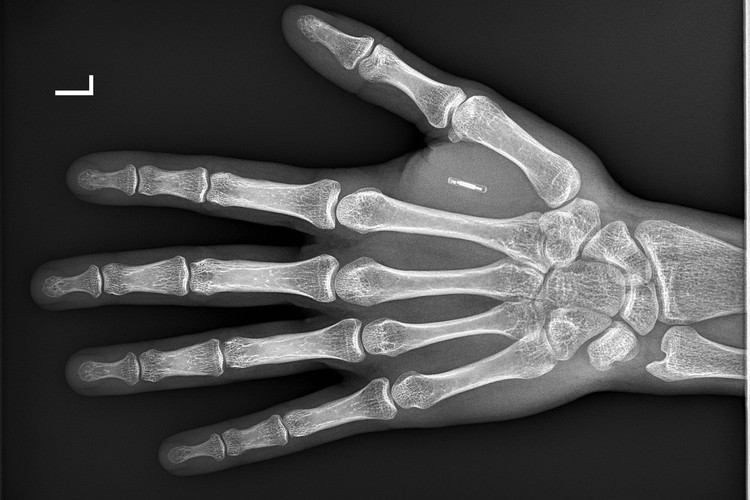
Soon, we will be waving hello to the ability to pay and control electronic devices with just a hand and waving goodbye to privacy through the use of RFID technology.
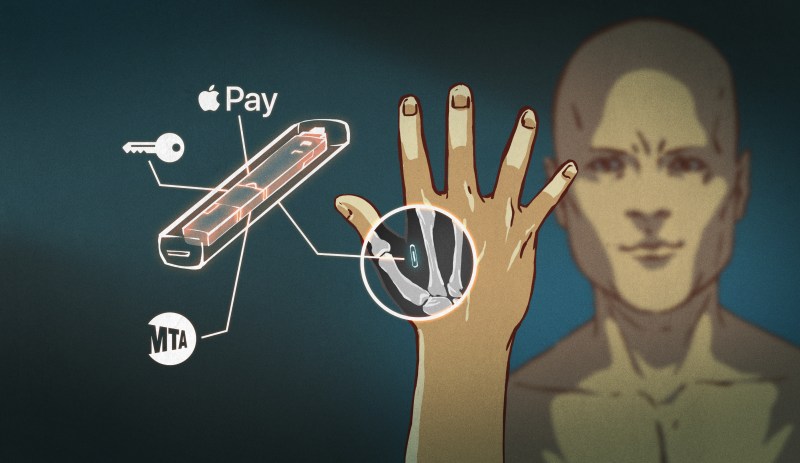
Implanting microchips into one's hand was first introduced and showcased by Kevin Warwick in Project Cyborg 1.0:
Kevin Warwick showed that by implanting the chip in his forearm, he could control doors, lights, heaters, and other computers without lifting a finger, while allowing a computer to monitor his location.And, Kevin Warwick’s Project Cyborg 2.0, went as far as implanting a chip in his nerves and was able to control an electronic wheelchair and an artificial arm. He was also able to create artificial sensations in his body with the chip.
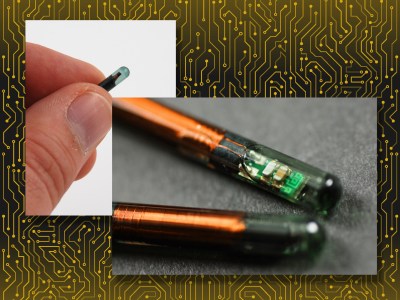
With the recent growth and adoption of RFID implants for personal and work use. It may not be long before RFID chip implantation advances to Warwick's Project Cyborg 2.0 and is standardized and readily available for anyone to do, cheaply. However, along with this wide spread adoption and standardization, comes ethical and privacy concerns.
James Moor states, in his 2005 paper Why we need better ethics for emerging technologies, that as technological revolutions increase, the social impact and ethical problems increase. Further, this RFID implant technology may be a sub-revolution within, to what Moor refers to as, the neurotechnology revolution; and this growing wide spread adoption may be what is going to push the neurotechnology revolution from the introduction stage to the permeation stage, bringing ever growing policy vacuums and ethical dilemmas.
 There may already be laws and regulations against eavesdropping on RFID transmissions for current uses, such as credit cards and cell phones, however, this doesn't take into account GPS tracking, data logging, or even worse, health and behavior tracking. Moreover, companies like Facebook are tracking information from phones and computers through loop holes in already existing policies.
Moor suggests 3 approaches to curtail these rising ethical and privacy concerns. All 3 of them involve ethicists, scientists, social scientists, and technologists. These groups may have an idea on how to go about dealing with ethical issues behind technologies like RFID implantation, but without educating the public on these issues, lawmakers and policy makers will overlook them, as it is not apart of the public's current problems. So, in order to get better ethical and privacy solutions for emerging technologies, like RFID implantation, it is important to educate the public on these emerging technologies and the effects they could possibly feel from it.