Showing posts with label google. Show all posts

Friday, February 21, 2020

Waving Goodbye to Privacy

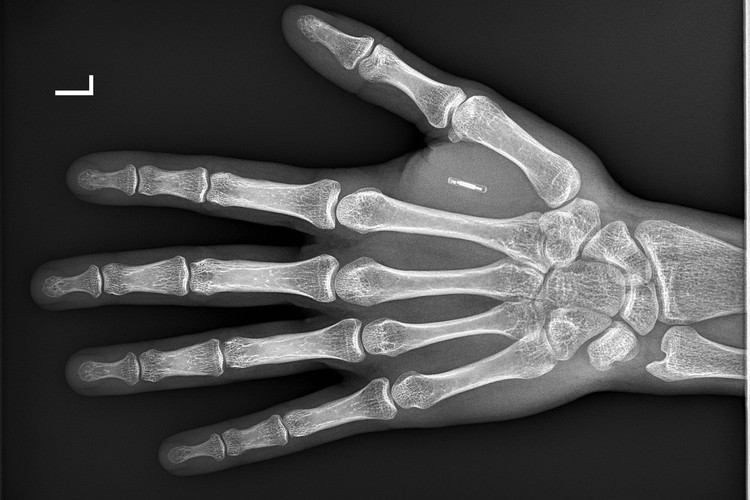
Soon, we will be waving hello to the ability to pay and control electronic devices with just a hand and waving goodbye to privacy through the use of RFID technology.
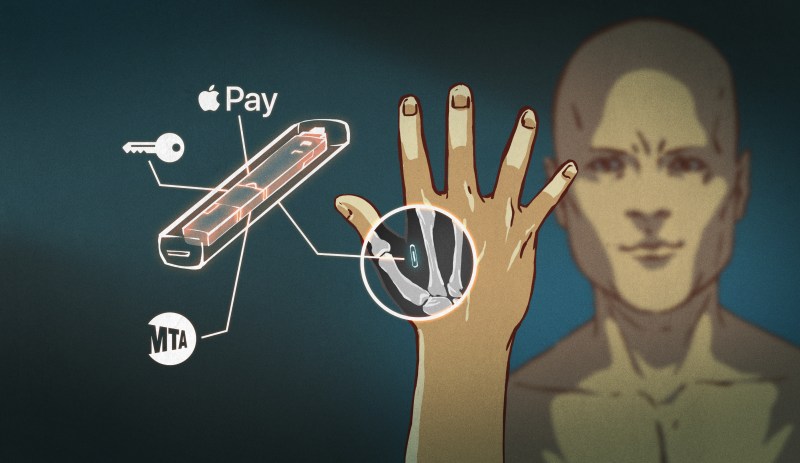

Implanting microchips into one's hand was first introduced and showcased by Kevin Warwick in Project Cyborg 1.0:

Kevin Warwick showed that by implanting the chip in his forearm, he could control doors, lights, heaters, and other computers without lifting a finger, while allowing a computer to monitor his location. 
And, Kevin Warwick’s Project Cyborg 2.0, went as far as implanting a chip in his nerves and was able to control an electronic wheelchair and an artificial arm. He was also able to create artificial sensations in his body with the chip.
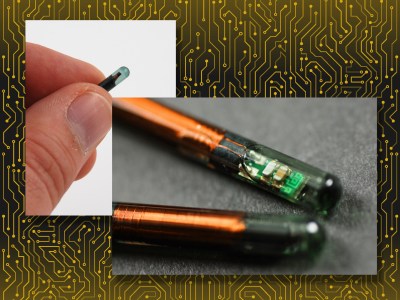
With the recent growth and adoption of RFID implants for personal and work use. It may not be long before RFID chip implantation advances to Warwick's Project Cyborg 2.0 and is standardized and readily available for anyone to do, cheaply. However, along with this wide spread adoption and standardization, comes ethical and privacy concerns.


James Moor states, in his 2005 paper Why we need better ethics for emerging technologies, that as technological revolutions increase, the social impact and ethical problems increase. Further, this RFID implant technology may be a sub-revolution within, to what Moor refers to as, the neurotechnology revolution; and this growing wide spread adoption may be what is going to push the neurotechnology revolution from the introduction stage to the permeation stage, bringing ever growing policy vacuums and ethical dilemmas.
There may already be laws and regulations against eavesdropping on RFID transmissions for current uses, such as credit cards and cell phones, however, this doesn't take into account GPS tracking, data logging, or even worse, health and behavior tracking. Moreover, companies like Facebook are tracking information from phones and computers through loop holes in already existing policies.


Moor suggests 3 approaches to curtail these rising ethical and privacy concerns. All 3 of them involve ethicists, scientists, social scientists, and technologists. These groups may have an idea on how to go about dealing with ethical issues behind technologies like RFID implantation, but without educating the public on these issues, lawmakers and policy makers will overlook them, as it is not apart of the public's current problems. So, in order to get better ethical and privacy solutions for emerging technologies, like RFID implantation, it is important to educate the public on these emerging technologies and the effects they could possibly feel from it.

Google Maps Timeline is Fascinating. It's also extremely concerning.

If you've never seen your Timeline on Google Maps, you're in for a big shock. If you have location history enabled (as many of us unknowingly do) on any iOS or Android device, then the Google Maps app has been logging every place you've ever visited. Go check out your location history here: Google Maps Timeline.
Launched in 2009, Google Maps Timeline "feature" gives you a detailed look into exactly where you were at any time, with place names, exact time ranges, and even displays photos you took at each place and time. It provides us a glimpse into the terrifying amounts of location data that Google collects from every user. On my Timeline, which goes back to October 2014, Google logged 363 places that I visit frequently! Each day I click features a detailed breakdown of each location I visited, how long I was in that place, the pictures I took during my stay at each place, and my mode of transportation between each place. You can see the below example example of just one day last week: the dark blue indicates that I was riding the bus, the light blue shows the path that I walked.
My location history from just a few days ago: 02/14/2020
Professor James Moor of Dartmouth College says that we should “realistically take into account that ethics is an ongoing and dynamic enterprise.” One potential problem with Google's massive location data collection is that we don't actually knows what Google actually does with your location data, but we all know deep down that Google didn’t implement detailed location tracking just so we can view our pretty timelines. According to Google’s Privacy & Terms page, Google uses location data for improving search results, driving directions, estimating how full a store/restaurant is, and improving Google core services’ functionality. However, there is no government oversight or enforcement to make sure that Google is following their own rules and staying ethical with our data.

Moor also says, "as technological revolutions increase their social impact, ethical problems increase." With the amount of location data that Google has on each user, they could write unethical prediction algorithms to know where we will be at any time of the day, or advertising algorithms to target us before we even reach our destination. With location data, Google might be able to start to learn our behavior better than we even understand our behavior; after all, we are only a culmination of all of our experiences we've had and the places we've been. Or, worst of all: Google could get hacked, exposing all of our location data to malicious hackers. The only way to protect yourself fully is to completely delete your Google account, and stop using Google services. However, with Google as such an integral part of our daily lives, our best bet to reasonably stay protected is to disable their location history tracking.

Friday, January 24, 2020

Waving Goodbye to Privacy

Soon, we will be waving hello to the ability to pay and control electronic devices with just your hand and waving goodbye to privacy through the use of RFID implantation technology.


Implanting microchips into someone's hand was first introduced and showcased by Kevin Warwick in Project Cyborg 1.0:
Kevin Warwick showed that by implanting the chip in his forearm, he could control doors, lights, heaters, and other computers without lifting a finger, while allowing a computer to monitor his location.
Kevin Warwick’s Project Cyborg 2.0 in March 2002 went as far as implanting a chip in his nerves and was able to control an electronic wheelchair and an artificial arm. He was also able to create artificial sensations in his body with the chip.

With recent adoption from personal use to companies already allowing employees to implant chips to get around the office, sign into computers, and purchase snacks, the time may be soon when the general public can have the chips implanted for personal use and may evolve the technology for medical use past Kevin Warwick’s Project Cyborg 2.0.

These recent advancements in RFID implantation technology may be a subrevolution that is apart of what James Moor refers to as a neruotechnology revolution, in his paper, Why we need better ethics for emerging technologies. The 2002 Project Cyborg 2.0 may have been the introduction stage and the developments of this subrevlution may be what pushes the neurotechnology revolution into the permeation stage. And with this stage also comes policy vacuums leading to significant growth of more ethical/privacy concerns.


With existing NFC readers in place from companies like Google, Amazon, and Facebook, which already track information from phones and computers, through loop holes of in-place policies, it is even more concerning that existing policies for current GPS tracking may not factor into chip tracking as we simply cannot turn off or put down RFID chip implants.


Even though James Moor mentions in 2005 that neurotechnology remains far from the power stage of a technological revolution these fast pace developments and adoptions only 15 years later puts this revolution even closer to the power stage and impending ethical problems (privacy, behavior tracking, GPS location) along with it.

Even though we can follow Moors three improvements to approach the ethical ramifications, it still begs the question how early is too early to think about ethical ramifications of emerging technologies even if they don’t reach a revolutionary stage?

The Ethics of Job Recruiting

I’ve been told to slow it down. Write a phenomenal cover letter. Try harder. Maybe if you narrowed your scope, you’d have a better chance of something. Aimless applications aren’t going to get you anywhere.

But on the other hand, I’ve been told that you never know until you try. A rejection isn’t an affirmation of your uselessness as a human being, it’s bringing you one step closer to an acceptance. Maybe your dream job is in Arkansas. And if anything, perseverance is something to be admired.

In-person interviews are still important, but not quite
as common as they used to be. Source
In Social networking technology and the virtues, Shannon Vallor argues that if virtue ethics is to be believed, habitual actions are important parts of moral development. So does desperately applying to every single job position of interest promote vices or virtues?

It’s clear that our parent’s “infallible” advice about getting a job no longer holds true. You can’t just “go to the headquarters, give them your resume and be personable!” when the job market spans the entire country. Most of the application process has been digitized, thanks to virtual employment marketplaces like ZipRecruiter and softwares like Zoom and Google Hangouts, resulting in unparalleled efficiency and speed. Luciano Floridi’s arguments in The Fourth Revolution take on a new dimension when applied to this current job search process — whatever “defines us uniquely” is no longer the mix of skills and hobbies it might have been in the past. If, according to your resume, you’re a senior at an elite university that knows Python, is passionate about AI, and wants to become a SWE at Google, you’re just one of thousands with the exact same list. You have to leverage your connections, know someone who knows someone, or just get lucky.

Interview chagrin hits hard. Source
I’ll argue that as long as you’re aware, digitized job applications promote positive moral development. Getting rejected repeatedly teaches us that we can’t have everything we want, that the world is bigger than we know, and that it’s important to keep trying. As Floridi hints, we’re actually pushed to understand ourselves better — do I actually want to work at Google, or do I just want the prestige? If we’re not at the center of the infosphere, how do we want to fit into it? And what will personal meaning and fulfillment look like in our lives, when we’re miles away from the pressure-pot competitiveness that permeates much of campus?

Thursday, January 23, 2020

Google Maps Timeline is Fascinating. It's also extremely concerning.

If you've never seen your Timeline on Google Maps, you're in for a big shock. If you have location history enabled (as many of us unknowingly do) on any iOS or Android device, then the Google Maps app has been logging every place you've ever visited. Check out your location history here before continuing: Google Maps Timeline.
My Frequent Ann Arbor Locations

Launched in 2009, Google Maps’ Timeline "feature" gives you a detailed look into exactly where you were at any time with place names, exact time ranges, and even displays photos you took at each place and time. It also provides us a glimpse into the terrifying amounts of location data that Google collects from every user. On my Timeline, which goes back to October 2014, Google logged 363 places that I visit frequently. Each day I choose features a detailed breakdown of each location I visited, how long I was in that place, the pictures I took during my stay at each place, and my mode of transportation between each place. You can see an example of just half of one day from my timeline in the screenshot below. You can clearly see that I left my house at 9:57am on this Gameday Saturday, I hung out at my friend Austin's house from 9:57am-11:59am, and then I walked for 11 minutes to Michigan Stadium, where I arrived 10 mins late to the game, at 12:10pm, and took a few pretty pictures. Browsing your exact moves throughout everyday for years is incredibly fascinating and creepy at the same time.

Half of my Location History from 11/16/2019
In “Why We Need Better Ethics for Emerging Technologies” by James Moor, he coins Moor’s Law, which states that, “as technological revolutions increase their social impact, ethical problems increase.” One ethical issue that has recently come under scrutiny concerns what Google actually does with your location data, because we all know deep down that Google didn’t implement detailed location tracking just so we can view our pretty timelines. According to Google’s Privacy & Terms page, Google uses location data for improving search results, driving directions, estimating how full a store/restaurant is, and improving Google core services’ functionality.

Google can derive your location data through your device’s IP address, your search queries, your marked places on Google Maps, and/or your device itself (if location history is enabled). Google claims to only use this information to display relevant ads and search results, but the act of storing and mass harvesting of user data is extremely problematic. Even though Google tries to do no evil, the fact that your exact location is recorded and stored on Google’s data centers, and that your location data is directly tied to your Google account (and by extension, your identity) is deeply troubling.