Showing posts with label Privacy. Show all posts

Friday, February 21, 2020

Waving Goodbye to Privacy

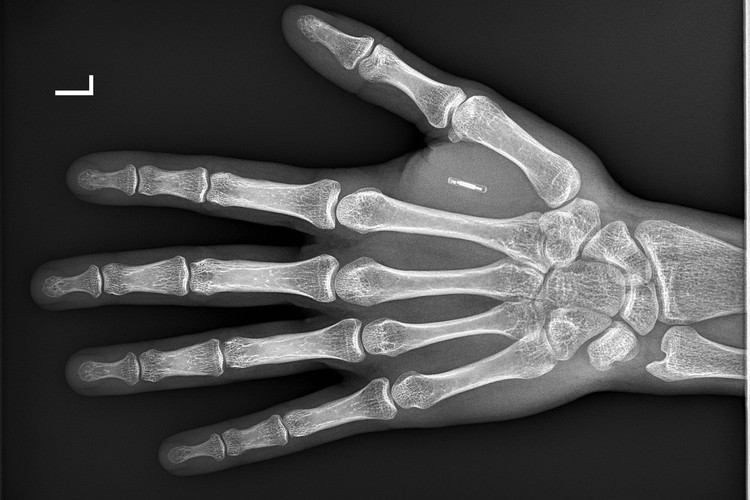
Soon, we will be waving hello to the ability to pay and control electronic devices with just a hand and waving goodbye to privacy through the use of RFID technology.
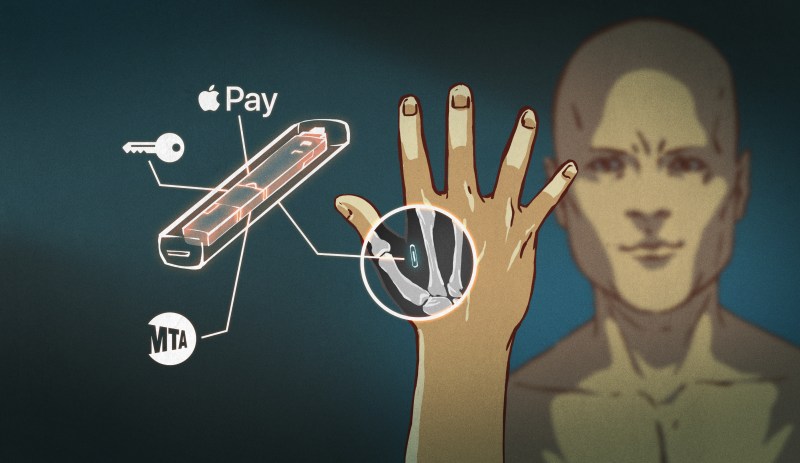

Implanting microchips into one's hand was first introduced and showcased by Kevin Warwick in Project Cyborg 1.0:

Kevin Warwick showed that by implanting the chip in his forearm, he could control doors, lights, heaters, and other computers without lifting a finger, while allowing a computer to monitor his location. 
And, Kevin Warwick’s Project Cyborg 2.0, went as far as implanting a chip in his nerves and was able to control an electronic wheelchair and an artificial arm. He was also able to create artificial sensations in his body with the chip.
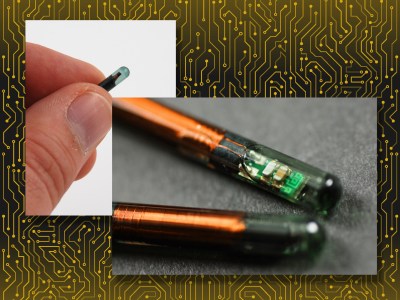
With the recent growth and adoption of RFID implants for personal and work use. It may not be long before RFID chip implantation advances to Warwick's Project Cyborg 2.0 and is standardized and readily available for anyone to do, cheaply. However, along with this wide spread adoption and standardization, comes ethical and privacy concerns.


James Moor states, in his 2005 paper Why we need better ethics for emerging technologies, that as technological revolutions increase, the social impact and ethical problems increase. Further, this RFID implant technology may be a sub-revolution within, to what Moor refers to as, the neurotechnology revolution; and this growing wide spread adoption may be what is going to push the neurotechnology revolution from the introduction stage to the permeation stage, bringing ever growing policy vacuums and ethical dilemmas.

There may already be laws and regulations against eavesdropping on RFID transmissions for current uses, such as credit cards and cell phones, however, this doesn't take into account GPS tracking, data logging, or even worse, health and behavior tracking. Moreover, companies like Facebook are tracking information from phones and computers through loop holes in already existing policies.


Moor suggests 3 approaches to curtail these rising ethical and privacy concerns. All 3 of them involve ethicists, scientists, social scientists, and technologists. These groups may have an idea on how to go about dealing with ethical issues behind technologies like RFID implantation, but without educating the public on these issues, lawmakers and policy makers will overlook them, as it is not apart of the public's current problems. So, in order to get better ethical and privacy solutions for emerging technologies, like RFID implantation, it is important to educate the public on these emerging technologies and the effects they could possibly feel from it.

Friday, February 7, 2020

Privacy Policies Don't Need to Protect Your Privacy


The motivation behind Moor's 2005 paper on why we need better ethics in developing technologies can be easily seen as we continue our progress through the Information Age. The internet, itself a sub-revolution of the greater Computer Revolution, is vital to communicating and conducting business in the world of today. While the practices of many sites operating on the internet and how they gather data are not strictly unethical, the ways in which the intentions of some websites are communicated can be tricky to understand.

Every website has a policy on how they collect and share data. This may entail how a company keeps data they collect safe, but it may also describe the ways in which a website shares data. This policy is publicly available through a sometimes cryptic document called a privacy policy, which Wikipedia defines as:

...a statement ... that discloses some or all of the ways a party gathers, uses, discloses, and manages a customer or client's data. ... 


[client's data] can be ... the person's name, address, date of birth, ... ID issue, ... financial records, credit information, medical history, where one travels, and intentions to acquire goods and services.

Is this practice ethical..? While Moor's insight is relevant, how the user is notified of data collection and use is addressed in Turilli and Floridi's 2009 paper discussing the ethics of information transparency. The work centers around three topics, one being "What information affects the ethical nature of information transparency." The authors state that in order to be ethical, information provided must not only consist of "a litany of properties," but must be "semantic content that can be used for epistemic purposes." This allows the user to make informed choices about what information they provide. As such, where policies are not presented in a way to be understood, the practice could be deemed unethical, never-the-less, it remains legal.


Laws do exist to make policies easier to understand, however the world remains divided on what data websites can collect and use. Where legal, the collected data is sometimes sold as a source of revenue alongside more traditional sources of income, like selling ad space or subscription fees. Entities that acquire this data may be brokers who gather information with the expressed intent to sell it to others, meaning...

the only thing separating your data from someone you don't want to have it could be nothing more than an inexpensive pay wall.


Friday, January 24, 2020

Waving Goodbye to Privacy

Soon, we will be waving hello to the ability to pay and control electronic devices with just your hand and waving goodbye to privacy through the use of RFID implantation technology.


Implanting microchips into someone's hand was first introduced and showcased by Kevin Warwick in Project Cyborg 1.0:
Kevin Warwick showed that by implanting the chip in his forearm, he could control doors, lights, heaters, and other computers without lifting a finger, while allowing a computer to monitor his location.
Kevin Warwick’s Project Cyborg 2.0 in March 2002 went as far as implanting a chip in his nerves and was able to control an electronic wheelchair and an artificial arm. He was also able to create artificial sensations in his body with the chip.

With recent adoption from personal use to companies already allowing employees to implant chips to get around the office, sign into computers, and purchase snacks, the time may be soon when the general public can have the chips implanted for personal use and may evolve the technology for medical use past Kevin Warwick’s Project Cyborg 2.0.

These recent advancements in RFID implantation technology may be a subrevolution that is apart of what James Moor refers to as a neruotechnology revolution, in his paper, Why we need better ethics for emerging technologies. The 2002 Project Cyborg 2.0 may have been the introduction stage and the developments of this subrevlution may be what pushes the neurotechnology revolution into the permeation stage. And with this stage also comes policy vacuums leading to significant growth of more ethical/privacy concerns.


With existing NFC readers in place from companies like Google, Amazon, and Facebook, which already track information from phones and computers, through loop holes of in-place policies, it is even more concerning that existing policies for current GPS tracking may not factor into chip tracking as we simply cannot turn off or put down RFID chip implants.


Even though James Moor mentions in 2005 that neurotechnology remains far from the power stage of a technological revolution these fast pace developments and adoptions only 15 years later puts this revolution even closer to the power stage and impending ethical problems (privacy, behavior tracking, GPS location) along with it.

Even though we can follow Moors three improvements to approach the ethical ramifications, it still begs the question how early is too early to think about ethical ramifications of emerging technologies even if they don’t reach a revolutionary stage?