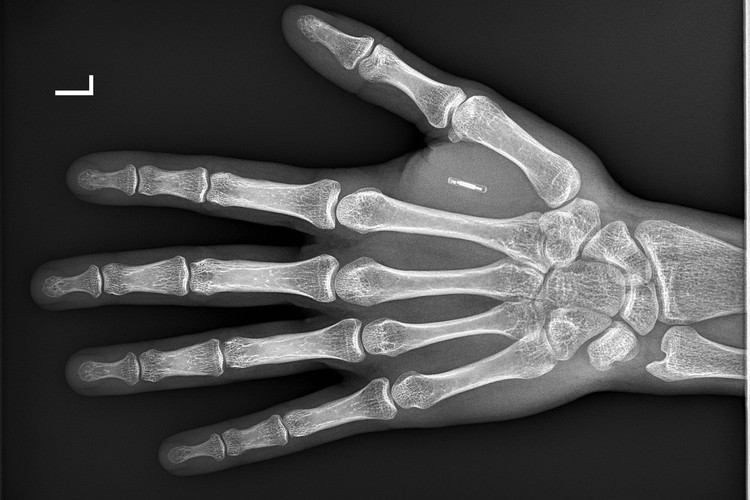
Showing posts with label Facebook. Show all posts

Friday, February 21, 2020

Waving Goodbye to Privacy

Soon, we will be waving hello to the ability to pay and control electronic devices with just a hand and waving goodbye to privacy through the use of RFID technology.
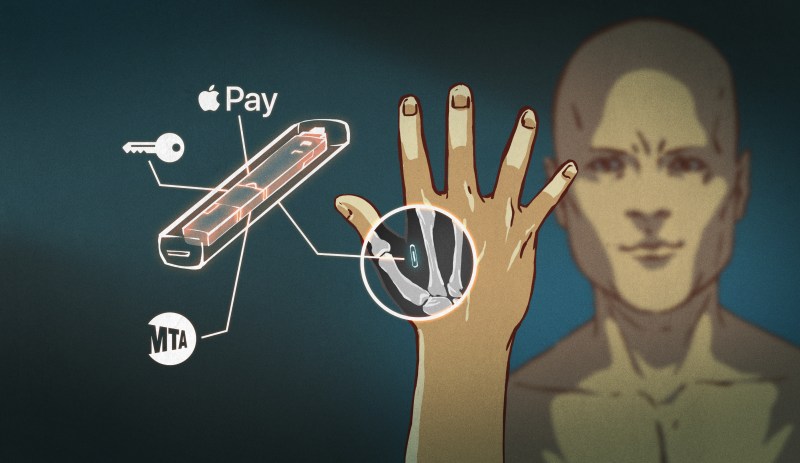

Implanting microchips into one's hand was first introduced and showcased by Kevin Warwick in Project Cyborg 1.0:

Kevin Warwick showed that by implanting the chip in his forearm, he could control doors, lights, heaters, and other computers without lifting a finger, while allowing a computer to monitor his location. 
And, Kevin Warwick’s Project Cyborg 2.0, went as far as implanting a chip in his nerves and was able to control an electronic wheelchair and an artificial arm. He was also able to create artificial sensations in his body with the chip.
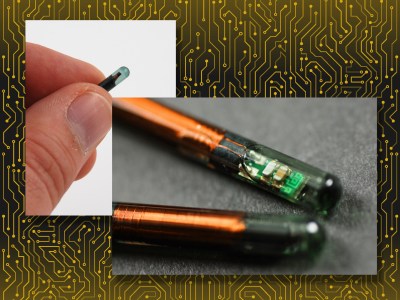
With the recent growth and adoption of RFID implants for personal and work use. It may not be long before RFID chip implantation advances to Warwick's Project Cyborg 2.0 and is standardized and readily available for anyone to do, cheaply. However, along with this wide spread adoption and standardization, comes ethical and privacy concerns.


James Moor states, in his 2005 paper Why we need better ethics for emerging technologies, that as technological revolutions increase, the social impact and ethical problems increase. Further, this RFID implant technology may be a sub-revolution within, to what Moor refers to as, the neurotechnology revolution; and this growing wide spread adoption may be what is going to push the neurotechnology revolution from the introduction stage to the permeation stage, bringing ever growing policy vacuums and ethical dilemmas.

There may already be laws and regulations against eavesdropping on RFID transmissions for current uses, such as credit cards and cell phones, however, this doesn't take into account GPS tracking, data logging, or even worse, health and behavior tracking. Moreover, companies like Facebook are tracking information from phones and computers through loop holes in already existing policies.


Moor suggests 3 approaches to curtail these rising ethical and privacy concerns. All 3 of them involve ethicists, scientists, social scientists, and technologists. These groups may have an idea on how to go about dealing with ethical issues behind technologies like RFID implantation, but without educating the public on these issues, lawmakers and policy makers will overlook them, as it is not apart of the public's current problems. So, in order to get better ethical and privacy solutions for emerging technologies, like RFID implantation, it is important to educate the public on these emerging technologies and the effects they could possibly feel from it.

Friday, February 7, 2020

Designing Technology to Make Life More Difficult?

Photo by Peak Wellbeing


      Shannon Vallor argues in the article Social networking technology and the virtues, that virtue ethics should be used to judge the ethicality of information technologies. She references Aristotle's idea that friendships are central to a good life, and such friendships should be evaluated on a set of virtues. Vallor expands upon Aristotle's original three, forming what she calls the communicative virtues: patience, honesty, empathy, fidelity, reciprocity, and tolerance. 

      Social networking technologies were designed, as their names suggest, to assist users in maintaining and growing their social networks. The key word here is assist. Luciano Floridi dispels the common notion that digital technologies are augmentative, which I discuss in my previous article The Great Digital Migration, and claims that they are instead changing the very nature of our being. Social networks may appear to be here to assist us, but the very act in doing so may instead be encouraging or discouraging development of our virtues.  


      As Vallor describes, 


"Most technologies are designed with the aim of making human activity easier, less risky, and more immediately satisfying... virtues are typically developed as a consequence of performing actions that are, at least initially, difficult. As Aristotle noted, virtues result from actions that pull against certain natural tendencies that would otherwise lead us away from excellence."

Face-to-face interaction is awkward at times. Keeping up with friends and family can be bothersome. Platforms like Facebook and LinkedIn exist to solve these problems associated with socializing, but the allure of their convenience and ease could replace those uncomfortable interactions that may be necessary to build virtues like patience, honesty, or empathy


      As a concluding remark, Vallor acknowledges the other side of the picture, describing how social networking technologies could aid in alleviating social pressures leading to deceive and maintain face, or tendencies to cling to physical groups. Moving forward, how should we take into account the strengths and weaknesses of these technologies? Should social platforms like Facebook leverage the benefits that difficult face-to-face interactions provide? Should the simple act of sending messages or friend requests be more complex and nuanced? 


Applying virtue ethics to designing technological tools, we must consider not only how the tool could assist us, but also how it could build upon our virtues, even if it means to sacrifice the efficiency and expedience that we're so used to.


References:


Vallor, S. Ethics Inf Technol (2010) 12:157. https://doi.org/10.1007/s10676-009-9202-1

Friday, January 24, 2020

Waving Goodbye to Privacy

Soon, we will be waving hello to the ability to pay and control electronic devices with just your hand and waving goodbye to privacy through the use of RFID implantation technology.


Implanting microchips into someone's hand was first introduced and showcased by Kevin Warwick in Project Cyborg 1.0:
Kevin Warwick showed that by implanting the chip in his forearm, he could control doors, lights, heaters, and other computers without lifting a finger, while allowing a computer to monitor his location.
Kevin Warwick’s Project Cyborg 2.0 in March 2002 went as far as implanting a chip in his nerves and was able to control an electronic wheelchair and an artificial arm. He was also able to create artificial sensations in his body with the chip.

With recent adoption from personal use to companies already allowing employees to implant chips to get around the office, sign into computers, and purchase snacks, the time may be soon when the general public can have the chips implanted for personal use and may evolve the technology for medical use past Kevin Warwick’s Project Cyborg 2.0.

These recent advancements in RFID implantation technology may be a subrevolution that is apart of what James Moor refers to as a neruotechnology revolution, in his paper, Why we need better ethics for emerging technologies. The 2002 Project Cyborg 2.0 may have been the introduction stage and the developments of this subrevlution may be what pushes the neurotechnology revolution into the permeation stage. And with this stage also comes policy vacuums leading to significant growth of more ethical/privacy concerns.


With existing NFC readers in place from companies like Google, Amazon, and Facebook, which already track information from phones and computers, through loop holes of in-place policies, it is even more concerning that existing policies for current GPS tracking may not factor into chip tracking as we simply cannot turn off or put down RFID chip implants.


Even though James Moor mentions in 2005 that neurotechnology remains far from the power stage of a technological revolution these fast pace developments and adoptions only 15 years later puts this revolution even closer to the power stage and impending ethical problems (privacy, behavior tracking, GPS location) along with it.

Even though we can follow Moors three improvements to approach the ethical ramifications, it still begs the question how early is too early to think about ethical ramifications of emerging technologies even if they don’t reach a revolutionary stage?